

Asthma Flare-Ups
Asthma is a common chronic respiratory condition that affects millions of people worldwide. While many individuals are able to manage their symptoms effectively with medication and trigger avoidance, asthma is not always predictable. Symptoms can sometimes worsen unexpectedly, affecting breathing, sleep, daily activities, and overall quality of life. These episodes can be unsettling and, in some cases, may require urgent medical attention. Understanding why asthma symptoms suddenly become worse and knowing how to respond can help reduce the risk of serious complications. In this article, we'll discuss the common causes, risk factors, symptoms, diagnosis, Asthma treatment options, recovery process, and prevention strategies for asthma flare-ups. We'll also explain when it's important to seek medical care and answer some frequently asked questions about managing asthma effectively.
August 12, 2026
Verified By Dr. Nigora Rahmatova
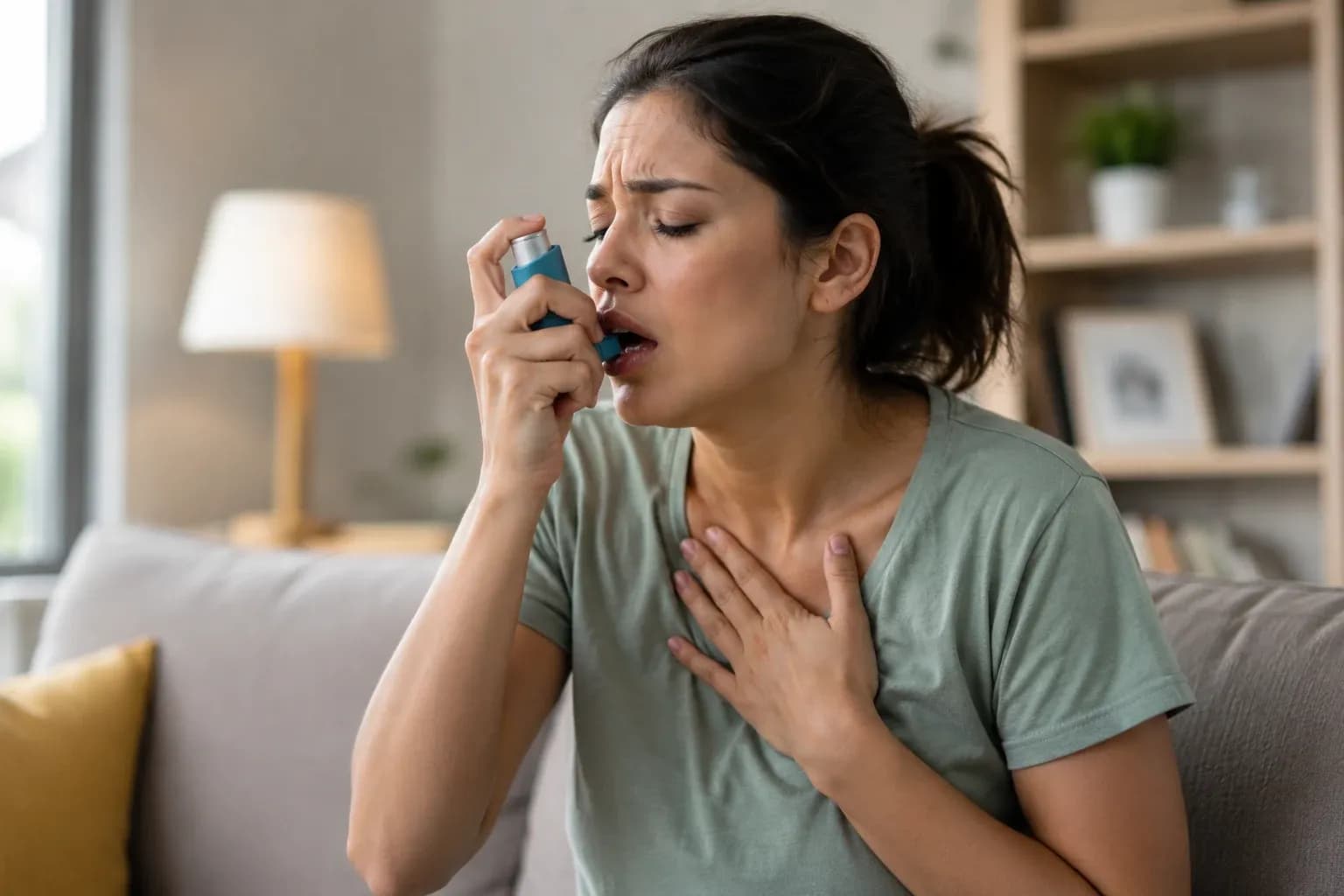
Table Of Contents
What Is an Asthma Flare-Up?
Asthma is a long-term lung condition that affects the airways, the small tubes that carry air in and out of the lungs. In a person with asthma, these airways are always slightly inflamed, even when breathing feels normal. Most of the time, the inflammation stays manageable. But sometimes, something triggers a sudden and sharp worsening of symptoms. That is what doctors call a flare-up. It can also be called an asthma attack or an exacerbation, and all three terms mean the same thing: breathing has become significantly harder, and the situation needs attention.
During a flare-up, the walls of the airways become more swollen. The muscles wrapped around the outside of the airways tighten, squeezing the tubes narrower. And the lining inside the airways produces more mucus than usual, a thick, sticky fluid that can partly or fully block the passage of air. Together, these changes make the airways so narrow that breathing in and out becomes genuinely difficult. The sensation is often described as breathing through a very narrow straw.
What makes flare-ups unpredictable is that they can happen even in people whose asthma is generally well-controlled. A person can be taking their medication correctly and avoiding their known triggers and still experience a flare-up after catching a cold or being exposed to unusually poor air quality. This does not mean the treatment is failing. It means asthma is a condition that requires ongoing attention and a plan for when symptoms escalate.
Causes of Asthma Flare-Ups
A flare-up starts when something triggers the immune system and causes the airways to react. The trigger varies from person to person. What causes a flare-up in one individual may have no effect on another. That said, there are several causes that appear consistently across a wide range of people with asthma.
Respiratory infections are the most common cause. Viruses like the common cold, influenza, and respiratory syncytial virus (RSV) cause temporary but significant swelling in the airways. Bacterial infections can also be responsible, though this is less frequent. When an infection is the cause, the flare-up may take longer to resolve because the airways stay inflamed for as long as the infection persists.
Irritants in the air are another frequent cause. Cigarette smoke, chemical fumes, strong perfumes, and air pollution can all irritate already-sensitive airways and set off a flare-up. Similarly, pollen, dust mites, mold, and pet dander are common allergens that can trigger the same reaction in people who are allergic to them. Exercise is also a recognised cause for some people. The rapid breathing during physical activity draws in large amounts of air, which dries and cools the airways and can provoke a response. Extreme weather conditions, both cold dry air and very hot humid air, can have a similar effect.
Risk Factors for Asthma Flare-Ups
Knowing the causes of a flare-up is one thing. Knowing what puts a person at higher risk of having more frequent or more severe flare-ups is something different, and equally useful.
People who have poorly controlled allergies are at greater risk because their immune system is already in a state of heightened reactivity. Someone who is regularly exposed to environmental triggers, such as a smoker in the household or a dusty work environment, faces more frequent provocation of their airways. Skipping daily preventer medication is one of the most avoidable risk factors. Preventers work by reducing the baseline level of inflammation in the airways over time, and stopping them, even when symptoms have been absent for weeks, removes that protection. Using an inhaler incorrectly is also a risk factor, since poor technique can mean far less medicine actually reaches the airways.
Underlying conditions matter as well. Gastroesophageal reflux disease (GERD), where stomach acid travels back up into the oesophagus, is a recognised trigger for flare-ups. Long-term anxiety and depression can worsen asthma control. Other chronic illnesses like diabetes and heart disease are also associated with more difficult-to-manage asthma.
Symptoms of an Asthma Flare-Up
Symptoms range from mild to severe, and they do not always follow a neat progression. Catching a flare-up early is genuinely useful because early treatment is more effective and can stop a mild episode from becoming a serious one.
Early Warning Signs
These are the signs that often appear before a full flare-up develops. They are subtle and easy to dismiss, especially if they overlap with symptoms of a cold or general tiredness. But paying attention to them is worth it.
- Mild, persistent coughing, particularly at night
- Throat clearing
- Breathing that seems faster or slightly irregular
- Unusual tiredness
- Restless sleep
- Difficulty completing normal daily activities
- Stomach ache or headache
- Changes in mood
During a Flare-Up
Once a flare-up is underway, the symptoms are harder to ignore. Coughing becomes worse, especially at night or during physical activity. Breathing feels laboured. The chest feels tight. A whistling sound on breathing out, known as wheezing, is common. The relief inhaler may feel less effective than usual or may not last as long.
During a Severe Flare-Up
Severe flare-ups are medical emergencies. Breathing becomes so difficult that the neck and rib muscles visibly strain with each breath. Speaking in full sentences is not possible. The person may gasp for air. In some cases, lips and fingernails take on a bluish colour, a sign that oxygen levels have dropped.
Notably, not every severe flare-up comes with wheezing. When the airways are extremely constricted, there may not be enough air moving to produce any sound at all. This is sometimes called a silent asthma attack, and it is particularly dangerous because it can be mistaken for improvement.
Diagnosis
Your doctor will assess the situation primarily by listening to the symptoms and by examining the chest. A stethoscope can detect abnormal breath sounds like wheezing or reduced air entry. Doctors can use a pulse oximeter that is a device which is put on the end of your finger and measures the amount of oxygen in the blood.
A device called a peak flow meter, which measures how fast a person can push air out of the lungs, provides a concrete number. Readings below 80% of a person's personal best suggest a flare-up is developing. Readings below 50% indicate a severe episode requiring emergency care.
When a flare-up is serious enough to require hospital assessment, additional tests may be ordered. A chest X-ray can rule out other causes of breathing difficulty, such as pneumonia or a collapsed lung. Blood tests check for signs of infection and assess kidney and liver function.
In a severe case, an arterial blood gas test may be done. This measures the levels of oxygen and carbon dioxide in the blood directly and gives the medical team precise information about how well the lungs are functioning at that moment.
Sputum samples, phlegm coughed up from the lungs, can be sent for culture if a bacterial infection is suspected and a specific antibiotic needs to be identified.
Other test that may be done include spirometry, nitric oxide measurement and heart tracing with an electrocardiogram (ECG).
Treatment of Asthma Flare-Ups
Treatment depends on how severe the flare-up is. Mild episodes can often be managed at home with a rescue inhaler. More serious ones require medical intervention.
Rescue Inhalers: A quick-relief or rescue inhaler, usually blue, contains a bronchodilator that relaxes the muscles around the airways. This widens the tubes and makes breathing easier within minutes. Taking one puff every minute, up to ten puffs over ten minutes, is a standard first response to a flare-up. If symptoms do not improve after this, emergency services should be called.
Steroid Tablets: When a flare-up is moderate to severe, a short course of oral corticosteroids such as prednisolone is commonly prescribed. These work by reducing the inflammation in the airways more broadly and over a longer period than an inhaler alone can manage. A typical course runs for five to ten days.
Preventer Inhalers: A doctor may temporarily increase the dose of a daily preventer inhaler during and after a flare-up. Preventer inhalers contain inhaled steroids and sometimes additional airway-relaxing medicines. They do not provide immediate relief, but they reduce the underlying inflammation that makes flare-ups more likely.
Nebulisers: In the hospital, a nebuliser is often used to deliver bronchodilator medication through a mask as a fine mist. This route delivers a higher dose of the medicine and is more effective in a serious flare-up than a handheld inhaler alone.
Antibiotics: These are prescribed only if a bacterial infection is confirmed or strongly suspected. They have no effect on viral infections, which are the more common cause of flare-ups, so they are not given automatically.
Other Hospital Treatments: For flare-ups that do not improve with the above, intravenous magnesium sulphate can be given through a drip. This helps relax the muscles around the airways. In more severe cases, aminophylline, another airway muscle relaxant, may be administered continuously through a drip for one to two days.
Complications
Most flare-ups resolve with treatment without lasting harm. But repeated or poorly managed flare-ups carry real risks, and these are worth understanding.
Frequent flare-ups are associated with a faster decline in lung function over time. The repeated inflammation and repair process gradually changes the structure of the airways, a process called airway remodelling. This can make asthma harder to control in the long term. Missed school, missed work, and disrupted sleep are the more immediate consequences. Severe flare-ups can require emergency room visits and hospital admissions. In rare cases, a very severe, untreated flare-up can be fatal. Flare-ups caused by bacterial infections carry the additional risk of the infection spreading if not treated promptly with antibiotics.
When to See a Doctor
Some flare-ups can be managed safely at home by following an asthma action plan. Others need medical attention. It is worth knowing the difference.
See a doctor promptly if:
- Symptoms do not improve after using a rescue inhaler
- The rescue inhaler is needed more often than usual, or it is not lasting as long
- Breathing difficulties are interfering with normal daily activities or sleep
- A flare-up follows a recent respiratory infection
Call emergency services or go to an emergency room immediately if:
- There is severe difficulty breathing, even at rest
- The person cannot speak in full sentences
- The neck and chest muscles are visibly straining with each breath
- Lips or fingernails are turning blue or grey
- The rescue inhaler provides no improvement after ten minutes
- Symptoms continue to worsen despite treatment
- Drowsiness, confusion or loss of consciousness
No person with asthma should wait to see if severe symptoms pass on their own. A flare-up that reaches this level is a medical emergency.
Recovery After a Flare-Up
Recovery depends on how severe the flare-up was and what caused it. Mild flare-ups may resolve within a few hours once treated. If a viral infection was the trigger, it may take several days for the airways to settle fully, even after the breathing difficulty has eased. This is because the underlying inflammation from the infection continues for some time.
After any flare-up, even a mild one, a follow-up appointment with a doctor is useful. The aim is to review what happened, check that the current treatment plan is adequate, and make any necessary changes. This might mean starting a preventer inhaler for the first time, increasing the current dose, or reviewing inhaler technique. If the flare-up required a hospital visit, a follow-up is usually arranged within a few days of discharge.
Prevention
Not every flare-up is preventable. Infections happen, and even people with excellent asthma control can be caught off guard. But there is a lot that can be done to reduce both the frequency and the severity of flare-ups.
Taking preventer medication consistently is the most important step. Preventer inhalers work by keeping the level of airway inflammation low day after day. Stopping them when symptoms seem absent removes that protection, often without the person noticing until a flare-up occurs. Identifying personal triggers and reducing exposure to them where possible is equally important. This might mean avoiding smoky environments, using dust-mite covers on mattresses, keeping windows closed during high pollen periods, or wearing a scarf over the nose and mouth in cold weather.
Annual flu vaccination and staying up to date with other recommended vaccines reduce the risk of the respiratory infections that so commonly trigger flare-ups. Washing hands regularly has the same practical effect. For people whose flare-ups are linked to anxiety or stress, addressing those conditions is part of asthma management, not separate from it. An asthma action plan, written in consultation with a doctor, ties all of this together. It tells a person exactly what to do at each stage of worsening symptoms, removing the uncertainty that can delay treatment.
At-Home Respiratory Care with First Response Healthcare
An asthma flare-up can be frightening, and for many people, the last thing they want to do at that moment is travel to a clinic. First Response Healthcare (FRH) offers professional medical care at home across UAE, Qatar and Riyadh, so patients can receive assessment and treatment in a familiar environment without the added stress of a hospital visit. FRH's team of trained healthcare professionals can attend quickly, carry out a thorough clinical evaluation, administer nebulisation and other acute treatments, and help patients review and update their asthma action plans following a flare-up.
Frequently Asked Questions
What is the difference between an asthma flare-up and an asthma attack?
There is no difference. Flare-up, attack, and exacerbation all describe the same event: a sudden worsening of asthma symptoms that makes breathing harder. The three terms are used interchangeably by healthcare professionals and patients alike.
How long does an asthma flare-up last?
A mild flare-up that responds quickly to a rescue inhaler may resolve within minutes to a few hours. Flare-ups triggered by a viral infection can take several days to fully settle because the airways remain inflamed while the infection is still active.
Can someone have an asthma flare-up without wheezing?
Yes. A severe flare-up can occur without any wheezing at all. When the airways are extremely constricted, there is not enough air moving through them to produce sound. This is called a silent asthma attack and is a sign of a serious emergency.
Can a flare-up happen even if asthma is well-controlled?
Yes. Well-controlled asthma means the risk is lower, but it does not eliminate it entirely. A bad respiratory infection, an unexpected exposure to a strong trigger, or poor air quality can cause a flare-up regardless of how consistently a person has been taking their medication.
Should I go to the hospital for every flare-up?
Not necessarily. Mild flare-ups that respond to a rescue inhaler and resolve within a reasonable time can be managed at home. Hospital care is needed if symptoms are severe, if the rescue inhaler is not helping, if breathing is extremely difficult at rest, or if there are signs such as blue lips or an inability to speak.
Is it safe to exercise if I have asthma?
For most people, yes. Exercise is a recognised trigger for some, but avoiding exercise entirely is not the recommended approach. A doctor can help develop a plan that may include using a rescue inhaler before physical activity and choosing exercise types that are less likely to provoke symptoms.