

Diabetes in Children
A child who suddenly cannot stop drinking water, or who starts wetting the bed again after months of being dry at night, is easy to write off as going through a phase. Often it is nothing more than that. But those two signs together, constant thirst and frequent urination, are also among the earliest markers of diabetes in children, and they are worth taking seriously rather than waiting out. Left untreated, these symptoms do not stay mild. They tend to worsen over days or weeks. The good news is that catching diabetes early makes a real difference. When it is recognized at this stage, serious complications are uncommon, and treatment can begin before things escalate. Diabetes in children takes two different forms, each with its own cause and its own approach to treatment. Understanding how these two forms differ helps explain why symptoms, treatment, and long-term care can vary so much from one child to another.
September 24, 2026
Verified By Dr. Alina Saeed
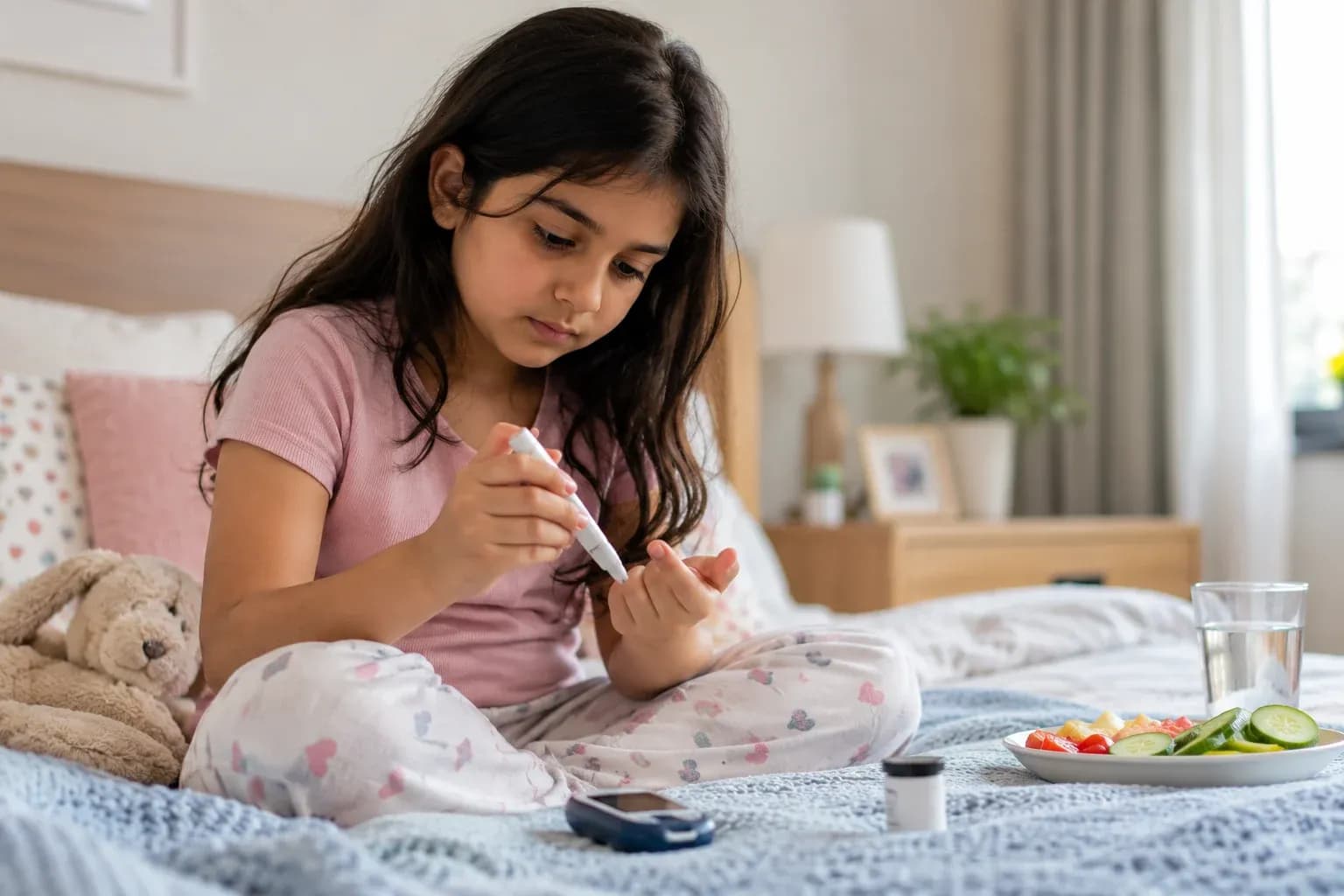
Table Of Contents
| Quick Fact | Information |
| Main types | Type 1 and Type 2 |
| Most common type in children | Type 1 diabetes |
| Main hormone involved | Insulin |
| Main symptom | Excessive thirst and frequent urination |
| Can it be cured? | No |
| Can it be managed? | Yes, with lifelong care |
What Is Diabetes in Children?
Diabetes happens when a child's blood sugar, also called glucose, runs too high. Glucose comes from food and is the body's main fuel source. A hormone called insulin, made in the pancreas, moves that glucose out of the bloodstream and into the body's cells. Without enough working insulin, glucose stays stuck in the blood instead of reaching the cells.
In type 1 diabetes, the pancreas makes little or no insulin, so the body has none of its own to rely on. This form used to be called juvenile diabetes, since for decades it was almost the only type seen in children.
Type 2 diabetes works differently. The body still makes some insulin, but the cells stop responding to it properly, a state known as insulin resistance. Once thought of as an adult condition, it is now showing up in children, too.
The two types share some symptoms but differ sharply in cause, onset, and daily management. Knowing which type a child has is important, since it shapes almost every decision about treatment from that point on.
| Feature | Type 1 Diabetes | Type 2 Diabetes |
| Cause | Autoimmune destruction of insulin-producing cells | Insulin resistance with progressive insulin deficiency |
| Insulin production | Little or none | Usually present but less effective |
| Onset | Often sudden | Usually gradual |
| Typical age | Childhood or adolescence | Increasingly common in older children and adolescents |
| Main treatment | Lifelong insulin | Lifestyle changes, medication, sometimes insulin |
| Prevention | Not currently possible | Risk may be reduced through healthy lifestyle habits |
What Causes Diabetes in Children?
Type 1 diabetes is an autoimmune condition. The immune system, which is supposed to fight off germs, mistakenly attacks and destroys the cells in the pancreas that make insulin. Once those cells are gone, the body can no longer produce insulin on its own.
It is worth being clear about what does not cause it. Type 1 diabetes has nothing to do with eating too much sugar, and nothing a parent did or did not do brought it on. It could not have been prevented.
Researchers are still working to understand exactly what sets off the immune system's attack on the pancreas, though a mix of genetic susceptibility and environmental exposures, including certain viral infections, is thought to play a part.
Type 2 diabetes has a different starting point. The body's cells stop responding well to insulin, so sugar has a harder time moving out of the blood and into them. Some children are more prone to this than others, and a few things make it more likely.
Excess weight, particularly around the abdomen, is the biggest driver behind rising rates of type 2 diabetes in children. Puberty adds to this, since it naturally makes the body less sensitive to insulin for a stretch of time, which can be enough to unmask diabetes in a child who was already susceptible.
Although these two forms develop in very different ways, each comes with its own set of risk factors that can make a child more likely to develop it.
What Are the Risk Factors for Diabetes in Children?
Some children are simply more likely to develop diabetes than others, and the risk factors differ depending on which type is involved.
Type 1 diabetes is driven mostly by factors outside anyone's control:
- Family history and genetics: Having a parent or sibling with type 1 diabetes slightly raises a child's own risk, and certain inherited genes are linked to higher susceptibility
- Viral infections: Some viruses are believed to occasionally trigger the immune response behind type 1 diabetes.
Type 2 diabetes has more to do with family history, pregnancy exposure, weight, and activity levels:
- Family history: Type 2 diabetes tends to cluster strongly in families, reflecting both genetics and shared lifestyle patterns.
- Exposure before birth: A mother's diabetes or obesity during pregnancy has been linked to a higher risk of type 2 diabetes in her child later.
- Excess weight: Carrying extra weight, particularly around the abdomen, is the single biggest driver behind rising rates of type 2 diabetes in children.
- Low physical activity: Inactivity compounds the effects of excess weight on how well the body responds to insulin.
None of these factors guarantee a diagnosis on their own, and many children with several risk factors never develop diabetes at all. What they do is shift the odds, which is why doctors watch more closely for symptoms in children who fall into these categories.
What Are the Symptoms of Diabetes in Children?
Type 1 diabetes symptoms tend to come on fast, often within days or a few weeks. Type 2 diabetes symptoms can be far more subtle and build up slowly, which is part of why it sometimes goes unnoticed for longer.
Across both types, the most characteristic signs are the ones parents should learn to recognize first:
- Unusual thirst that does not let up, even after drinking water.
- Frequent urination, including bedwetting, in a child who was previously dry at night.
- Constant hunger, often alongside unexplained weight loss, sometimes even as the child seems to be eating normally or more than usual.
A few other symptoms tend to show up alongside these and are worth watching for too:
- Tiredness or low energy that seems out of proportion to the day.
- Mood changes or irritability that feel unlike the child's usual temperament.
Two signs deserve extra attention, since they point to a more advanced stage of the disease and call for urgent medical care rather than a routine appointment:
- Stomach pain, nausea, or repeated vomiting.
- Breath with a noticeably fruity smell, which is a warning sign that should never be brushed aside.
Type 2 diabetes can also show a skin change called acanthosis nigricans, a dark, velvety patch of skin often seen on the neck or in body folds, which reflects underlying insulin resistance.
Any combination of these symptoms is worth a same-week conversation with a pediatrician, even if a child otherwise seems fine.
How Is Diabetes in Children Diagnosed?
When a child shows the symptoms described above, diagnosis usually starts with a simple blood test, often the same day as the appointment. From there, doctors typically move through a short, predictable sequence of steps to confirm diabetes and identify which type is involved.
- Random blood glucose test: Taken at any time regardless of when the child last ate. If the result is high and symptoms are present, this alone is often enough to strongly suggest diabetes.
- Fasting blood sugar test: Taken after roughly eight hours without food, this measures blood sugar against a standardized threshold used specifically for diagnosis.
- Hemoglobin A1C (A1C) test: Shows average blood sugar over the past three months rather than a single moment, confirming that high blood sugar is an ongoing pattern rather than a one-off spike.
Once diabetes is confirmed, the next question is which type a child has, since that decides treatment. Doctors typically look at a combination of clues, including how quickly symptoms appeared, the child's age and weight, and additional blood work, to tell the two types apart.
| Test | Normal | Prediabetes | Diabetes |
| Fasting blood glucose | Less than 100 mg/dL | 100-125 mg/dL | 126 mg/dL or higher (on two separate tests unless symptoms are present) |
| Random blood glucose | Varies | Not used | 200 mg/dL or higher with classic symptoms of diabetes |
| Hemoglobin A1C (HbA1c) | Less than 5.7% | 5.7-6.4% | 6.5% or higher |
How Is Diabetes in Children Treated?
There is currently no cure for either type of diabetes, but both are manageable with the right daily routine. Treatment looks quite different depending on which type a child has been diagnosed with.
- Type 1 diabetes: Insulin is needed every single day, delivered either through injections or a wearable insulin pump.
- Type 2 diabetes: Some children manage it successfully through changes to diet and increased physical activity alone. When that is not enough to bring blood sugar into a healthy range, doctors add oral medication and, in some cases, insulin.
Treatment does not stop at insulin or medication. Ongoing monitoring of blood sugar, whether through finger-prick testing or a continuous glucose monitor, becomes part of daily life for both types, alongside regular checkups with a diabetes care team to keep the plan on track.
| Type | Main Treatment |
| Type 1 | Insulin + glucose monitoring |
| Type 2 | Lifestyle changes ± medication ± insulin |
Living With Diabetes
A diabetes diagnosis is not the end of a normal childhood. With good day-to-day management, most children with diabetes grow up doing the same things their peers do, and the adjustment tends to get easier as families settle into a routine.
The early weeks after diagnosis are usually the hardest part. Learning to give insulin, count carbohydrates, and check blood sugar can feel overwhelming at first, for parents as much as for the child, but with time, most families become more confident as routines develop.
Technology has changed a great deal of what day-to-day diabetes management looks like. Continuous glucose monitors track blood sugar around the clock without repeated finger pricks, and some insulin pumps can communicate directly with these monitors to adjust insulin delivery automatically. These advances have made diabetes easier to manage than it was even a decade ago.
Even so, technology does not replace regular medical guidance. Children with diabetes benefit from ongoing support from their healthcare team, and for some families, home healthcare services can provide additional help with monitoring, education, and day-to-day disease management while keeping treatment on track.
When to Seek Medical Help
Some situations call for urgent attention rather than a routine appointment. Parents should seek emergency care right away if a child shows any of the following, especially alongside symptoms already described:
- Breath with a noticeably fruity odor.
- Breathing that is unusually fast or deep.
- Confusion or unusual drowsiness.
- Repeated vomiting.
These can be signs of diabetic ketoacidosis (DKA), a serious complication where the body, lacking enough insulin, starts breaking down fat for fuel and produces a buildup of acids called ketones. Left untreated, DKA can be life-threatening.
Outside of an emergency, any new combination of the symptoms already covered deserves a prompt call to a pediatrician rather than a wait-and-see approach.
What Are the Complications of Diabetes in Children?
Poorly managed blood sugar over months and years can affect several parts of the body. The good news is that these complications usually take years of consistently high blood sugar to develop, and they are far less common in children who receive good treatment and regular follow-up care.
- Heart and blood vessels: Higher long-term risk of high blood pressure and narrowed arteries.
- Nerves: Tingling, numbness, or burning pain, often starting in the hands and feet.
- Kidneys: Reduced ability to filter waste from the blood over time.
- Eyes: Vision changes, and in serious cases, vision loss, from damage to the retina.
- Bones: Weaker bone strength later in adulthood, raising osteoporosis risk
None of this is likely to happen to a child whose blood sugar is kept in a healthy range most of the time. That single habit, more than anything else, is what determines whether these complications ever become a real concern rather than a distant possibility.
Can Diabetes in Children Be Prevented?
Type 1 diabetes cannot currently be prevented. Its root cause is an immune response that researchers do not yet know how to stop, though active research is underway into ways to delay or block it in children identified as high risk.
Type 2 diabetes is a different story. Because it is closely tied to weight and activity levels, a few everyday habits can meaningfully lower a child's risk:
- Supporting a healthy body weight through balanced eating rather than restrictive dieting.
- Encouraging regular physical activity, ideally most days of the week.
- Limiting long stretches of screen time in favor of active play.
These habits work best as family habits rather than rules aimed only at the child, since children rarely control what food is in the house or how the household spends its evenings. A family that eats and moves differently together tends to see the change stick.
None of this guarantees a child will never develop type 2 diabetes, particularly if a strong family history is already in play. But it shifts the odds meaningfully in a child's favor.
Since prevention is not always possible, ongoing professional support becomes an important part of helping children live well with diabetes.
How First Response Healthcare (FRH) Can Help
A new diabetes diagnosis in a child rewrites the family's daily routine almost overnight. Insulin schedules, carb counting, glucose checks before and after meals, and the constant low hum of worry about the next reading can wear parents down fast, especially in the first weeks. First Response Healthcare (FRH) works alongside families during this adjustment, offering skilled home nursing support that helps parents build confidence in day-to-day diabetes management rather than carrying it alone.
FRH's home healthcare teams support families managing pediatric diabetes and a wide range of other chronic conditions, from medication administration and glucose monitoring to general pediatric nursing care and family education on daily routines. The goal is steady, practical support delivered where a child is most comfortable: at home, surrounded by their own family, rather than in and out of clinical settings for every small concern.
Frequently Asked Questions
Can a child with type 1 diabetes ever stop taking insulin?
No. Type 1 diabetes means the body no longer produces its own insulin, so daily insulin is required for survival, not just symptom control. There is currently no cure, though ongoing research aims to delay or prevent onset in high-risk children.
Can my child still play sports if they have diabetes?
Yes, and physical activity is generally encouraged for children with either type of diabetes. Families typically need to adjust insulin dosing or snack timing around exercise, which a diabetes team can help plan.
Does a family history of diabetes mean my child will definitely get it too?
No. Family history raises risk but does not make diagnosis certain. Many children with a parent or sibling who has diabetes never develop it themselves.
What is the difference between type 1 and type 2 diabetes in simple terms?
In type 1 diabetes, the body makes no insulin at all. In type 2 diabetes, the body makes some insulin but cannot use it properly.
Is diabetes in children linked to what they eat?
Diet plays a meaningful role in type 2 diabetes risk, particularly around excess weight gain, but it does not cause type 1 diabetes, which is an autoimmune condition unrelated to sugar intake or diet.