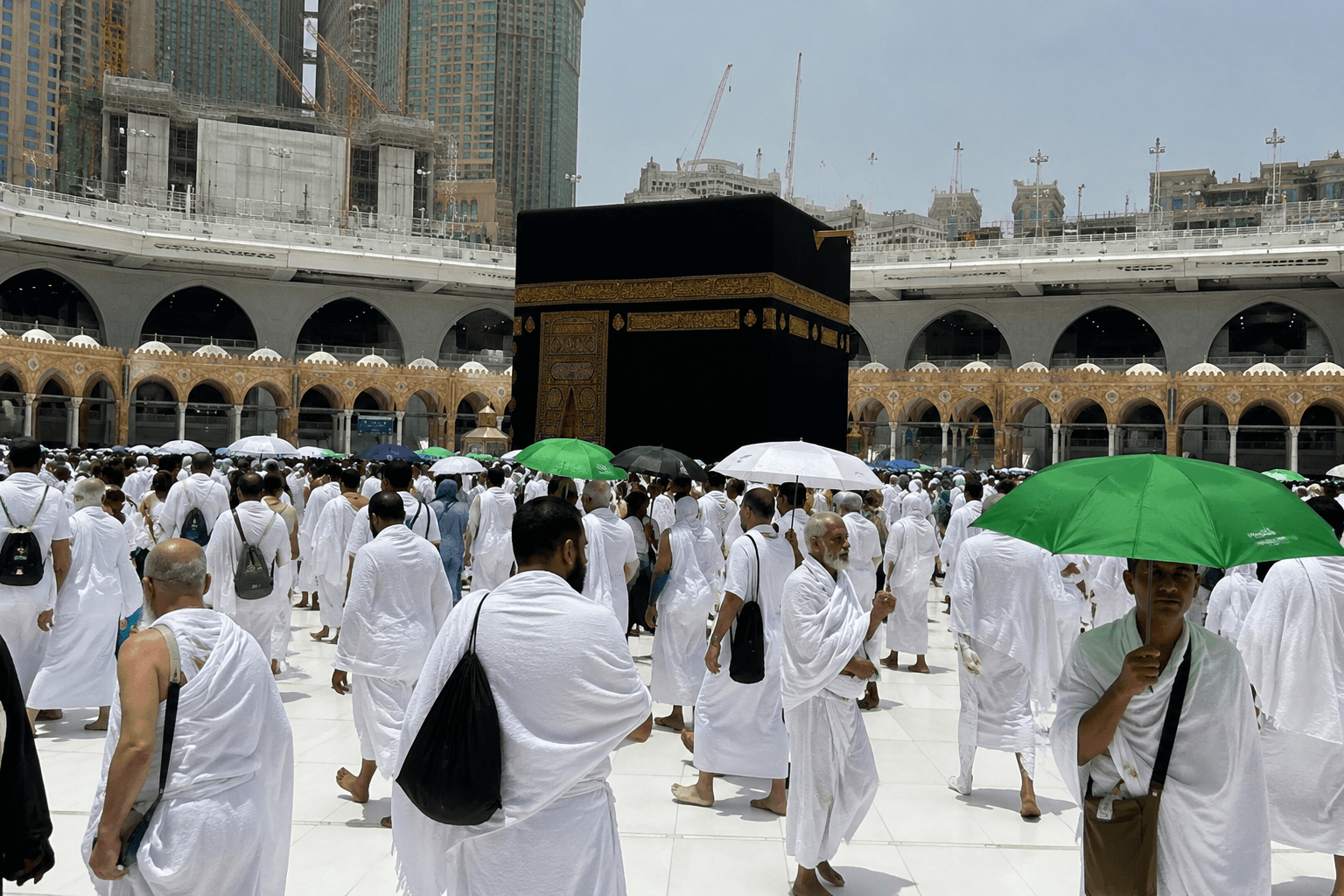
Every year, millions of Muslims make the journey to Makkah for Hajj. It is one of the largest mass gatherings on earth, and the physical demands are no small thing. Pilgrims can walk up to 35 to 40 miles over five days, often in dense crowds and under extreme heat. That combination of distance, crowds, and climate is why health preparation matters so much before a single bag gets packed.
This year, health authorities have been emphatic about three things: get vaccinated well in advance, stay hydrated throughout, and watch yourself and those around you for early warning signs.
Search
Can’t find what you’re looking for?Reach out to us
Health Tips
Hajj Vaccination Requirements & Health Tips: Essential Advice for Pilgrims in Saudi Arabia
July 27, 2026
July 27, 2026
Quick Threads
- Hajj Vaccination Requirements Before You Travel
- Hajj Health Tips for Staying Safe in Extreme Heat
- Hajj Health Tips: Recognize the Warning Signs Early
- Hajj Health Requirements: Carry Your Medications and Medical Records
- Complete Your Pre-Hajj Health Requirements With FRH
Hajj Vaccination Requirements Before You Travel
Following the health guidelines for Hajj pilgrims is not optional when it comes to vaccination. The quadrivalent meningococcal ACWY vaccine is the only vaccination required for all pilgrims entering Saudi Arabia, and it must be administered at least ten days before arrival. The conjugate formulation stays valid for five years, while the polysaccharide version is valid for three. No certificate, no visa. Staying on top of the hajj vaccination requirements early on gives pilgrims enough buffer time to sort out any gaps before departure.
The Hajj and Umrah have been associated with meningococcal outbreaks going back to 1987, and again in 2000 and 2001, which is why this requirement has been in place for years.
Beyond meningococcal disease, the importance of vaccination before Hajj extends to several other diseases. Pilgrims must also show proof of COVID-19 immunisation. Accepted proof includes a single dose of an updated 2025-2026 season vaccine, completion of a primary vaccination series received between 2021 and 2024, or laboratory-confirmed recovery from COVID-19 during 2025.
Influenza vaccination is also required. It must have been received within 12 months before travel, and pilgrims should receive the Southern Hemisphere 2026 influenza vaccine at least two weeks before departure, since Hajj falls during the Southern Hemisphere influenza season. Those who already received a Northern Hemisphere flu shot this past season are still advised to get the Southern Hemisphere update, with at least an eight-week gap between doses.
Pilgrims traveling from countries with ongoing poliovirus circulation must also show proof of polio vaccination. For some countries, the inactivated polio vaccine (IPV) is required 6 weeks prior to entering Saudi Arabia. Pilgrims from yellow fever endemic regions face additional requirements as well.
This is really the heart of the Importance of vaccination before Hajj. With two million people moving through the same holy sites at once, one unvaccinated traveler can put an entire crowd at risk. The Communicable Diseases Agency advises pilgrims to consult a healthcare provider four to six weeks before travel for a full risk assessment, including any medical conditions that may need attention before departure.

Are you looking for a service?
Enquire Now
Hajj Health Tips for Staying Safe in Extreme Heat
Vaccines protect against infection. They do nothing against the heat, and the heat in Makkah during Hajj is serious. Pilgrims should plan for sustained temperatures above 45 degrees Celsius across all five days, with the Day of Arafat on 9 Dhul Hijjah considered the highest-risk day of the entire pilgrimage due to direct sun exposure and no natural shade.
During the 2024 season, Saudi officials reported more than a thousand heat-related deaths among pilgrims. That number puts the risk in plain terms.
The Saudi Ministry of Health recommends drinking at least two to three litres of water per day, more during ritual activities, and sipping continuously rather than waiting until thirst sets in. The ministry also notes that preventing heat exhaustion starts with carrying and using an umbrella while moving and avoiding long walks under direct sunlight.
Pilgrims are advised to wear light clothing and take regular rest breaks in shaded areas, and to remain alert to early symptoms of dehydration, fatigue, and heat stress. Staying on top of heat safety is just as much a part of the broader health guidelines for hajj pilgrims as vaccination is. These kinds of Hajj health tips are worth revisiting closer to departure, since heat preparedness can make the difference between a manageable day and a medical emergency.
Hajj Health Tips: Recognize the Warning Signs Early
Heat exhaustion and heat stroke are not the same thing. Heat stroke is a medical emergency. If someone is confused, stops sweating, or loses consciousness, call 997 (Saudi Red Crescent ambulance) immediately, then move them to shade and cool them as aggressively as possible.
Older adults, people with diabetes, heart conditions, and very young children are more vulnerable to dehydration and heat stress. If someone in your group becomes disoriented, dizzy, or unusually tired, treat it as an early warning sign and act quickly.
Middle East Respiratory Syndrome(MERS) is another risk specific to this region. MERS is caused by the MERS-CoV virus and can lead to pneumonia and, in severe cases, death. Approximately one-third of reported cases have been fatal. The virus spreads through contact with infected camels or contaminated animal products, and also through close contact with infected people. Pilgrims are advised to avoid touching or feeding camels, and to wear a surgical mask in crowded spaces.
Anyone who becomes unwell during the pilgrimage or within two weeks of returning home should seek medical attention promptly and inform their doctor of their travel history.
Hajj Health Requirements: Carry Your Medications and Medical Records
Pilgrims should carry sufficient quantities of personal medication in original packaging and maintain a detailed medical report specifying any illnesses, medications, and prescribed dosages. In a crowd of two million people, losing access to essential medication mid-pilgrimage is an avoidable problem with a straightforward solution: pack more than you think you need. Meeting these hajj health requirements before departure removes one more variable from an already demanding journey.
Medical insurance is also worth checking before departure. Medical insurance is not automatically provided for pilgrims during Hajj, so pilgrims should consult their service provider before travel to confirm what local medical services are covered. Between the medication planning and the insurance check, it's worth circling back to the importance of vaccination before Hajj one more time, since a well-timed vaccine can prevent the kind of illness that turns into a medication or insurance problem in the first place.
Complete Your Pre-Hajj Health Requirements With FRH
If you or a family member is preparing for Hajj and needs a pre-travel health consultation, First Response Healthcare (FRH) offers at-home medical visits in Riyadh so you can get your vaccination review, medical fitness assessment, and travel health advice without the wait. FRH's visiting physicians can review your current medications, flag any health conditions that require attention before departure, and help you put together the medical documentation you need for the pilgrimage. For pilgrims managing chronic conditions, this kind of consultation before travel is worth doing well ahead of the departure date