Search
Can’t find what you’re looking for?Reach out to us

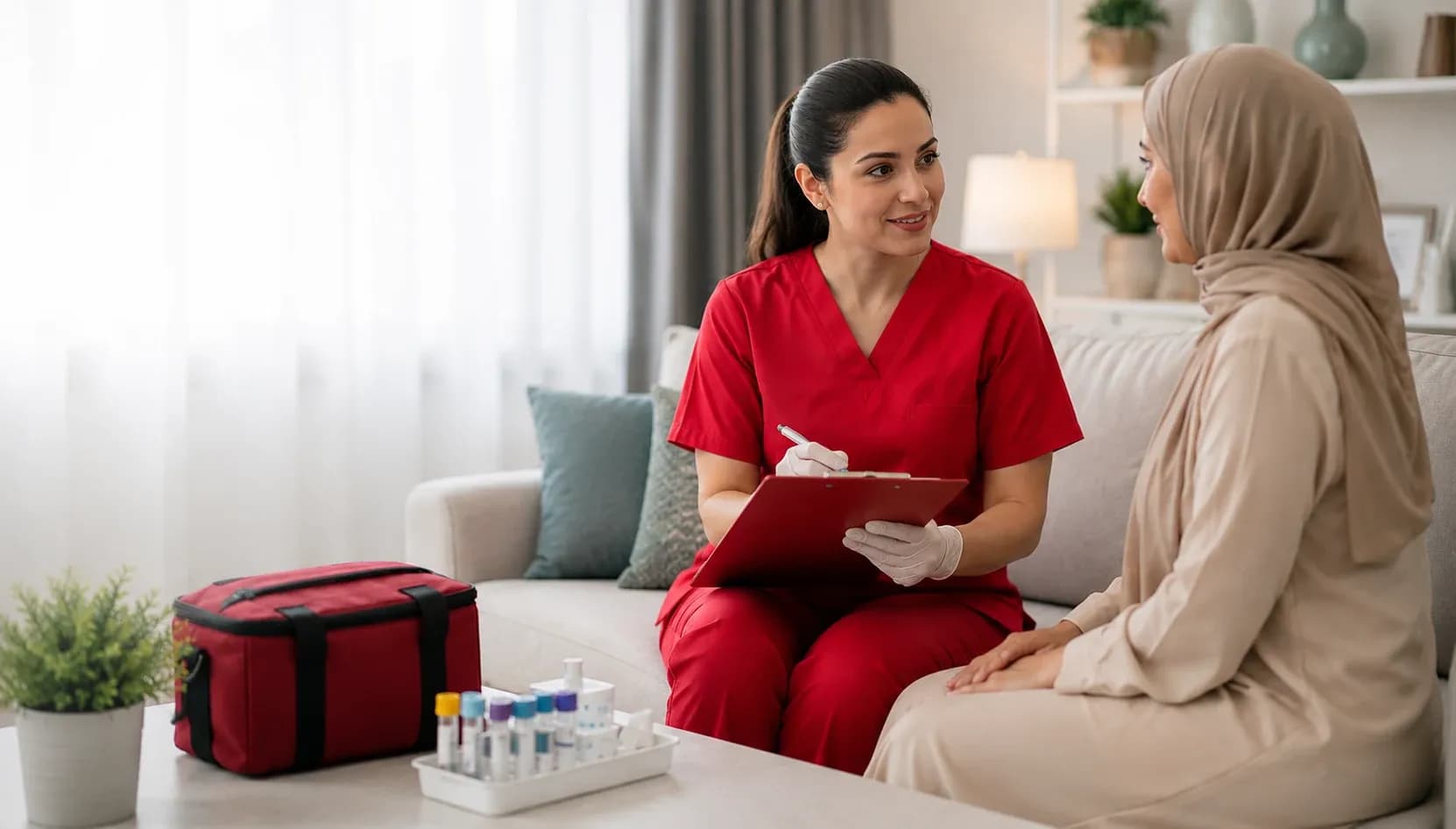
STD Test at Home

Discreet STD testing at your doorstep within 30 minutes.
30
Minutes
JCI Accredited
4.9/5 Highly Rated
Our STD test at home in Dubai provides discreet, accurate screening for sexually transmitted infections through safe sample collection at your doorstep. Certified laboratory testing ensures reliable results, early detection, and complete confidentiality.
Benefits of Our At-Home STD Testing
Comprehensive STD Screening
Our At-Home STD Screening uses advanced laboratory testing to detect multiple sexually transmitted infections for accurate and reliable diagnosis.
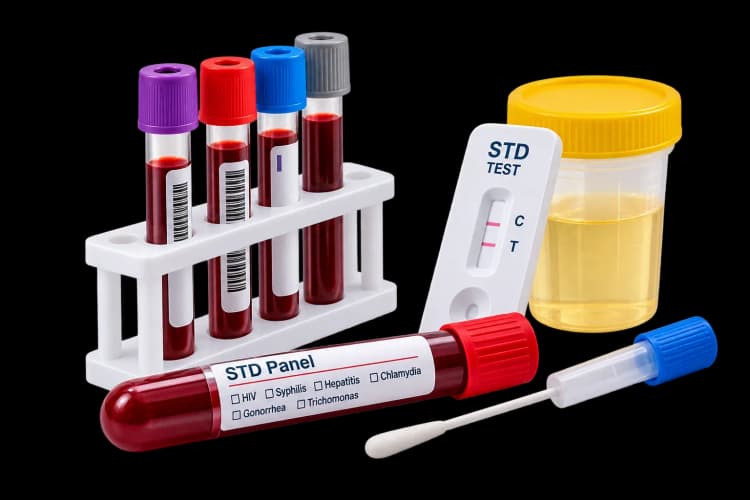
Early Detection & Timely Care
Identifying infections early helps prevent complications and enables faster treatment and better health outcomes.
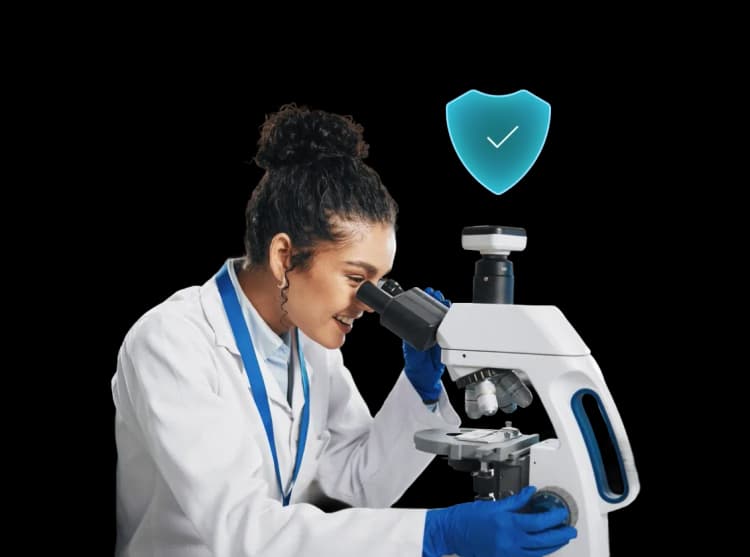
Accurate & Reliable Results
Your sample is analyzed in accredited laboratories using high-quality diagnostic technology, ensuring precise and dependable results.
100% Confidential & Private
All results are handled with strict medical confidentiality, ensuring complete privacy and professional care.
Common STD Symptoms to Watch For
Unusual Genital Discharge
A change in the color, smell, or amount of discharge from the penis or vagina, or unexpected bleeding between periods or after sex, could be a sign of an STD.
Burning or Pain During Urination
A painful or burning sensation while passing urine can occur with several sexually transmitted infections. This STD symptom may occur with or without other noticeable signs of infection.
Sores, Blisters, or Warts
Unexplained sores, blisters, bumps, or warts around the genitals, mouth, or anus.
Genital Itching or Irritation
Persistent itching, redness, or irritation in the genital area can occur with some sexually transmitted infections.
Pelvic or Testicular Pain
Pain in the lower abdomen, pelvis, or testicles may be linked to certain untreated STDs. Persistent or unexplained pain should be medically evaluated.
No Symptoms at All
Many sexually transmitted infections cause no symptoms, particularly in the early stages. If you've had unprotected sex or think you may have been exposed, getting tested is the only way to know for sure.
 24/7 UNINTERRUPTED AT-HOME CARE
Private STD Testing at home with Expert Support.
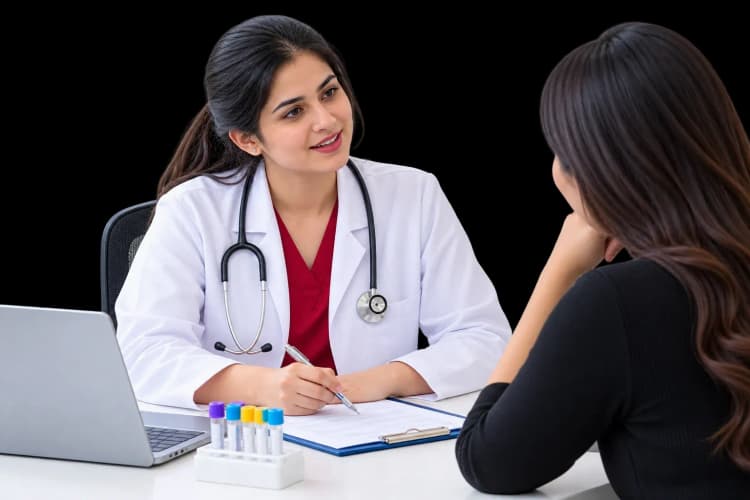
Get a private STD test at home with reliable diagnostics, complete confidentiality, and access to qualified doctors whenever you need guidance. Get reliable STD testing at home in Dubai with convenient sample collection by our trained professionals.

Understand Your STD Test Results
Learn what your test results mean and when further medical guidance or follow-up testing may be recommended.

About STD Test
What is STD testing?
Sexually transmitted diseases (STDs) are infections that spread primarily through sexual contact and can affect health and be passed to others. STD testing is a medical screening used to detect these infections through laboratory analysis of blood, urine, or swab samples.
Who Should Consider STD Screening?
STD testing is an important part of maintaining your sexual health, especially for individuals who are sexually active. Regular screening helps identify infections early, even when there are no noticeable symptoms, allowing timely treatment and helping prevent transmission. It is recommended for:
- Individuals who are sexually active and want routine screening
- People with new or multiple sexual partners
- Anyone experiencing symptoms such as unusual discharge, sores, itching, or pain during urination
- Individuals whose partner has been diagnosed with an STD or who want reassurance about their sexual health


Why Choose First Response Healthcare for an STD Test at Home?
- Sample collection by DHA-licensed professionals following JCI-accredited care standards
- Discreet home testing with complete privacy and confidentiality
- No clinic visits or waiting rooms required
- Accurate lab reports with doctor guidance when needed
- 24/7 availability. Reach you in 30 minutes.
- Free prescription and follow-up call consultation

Hear from our patients.
More Services
Discover all services you can get at home in span of time.
Frequently Asked Questions
A trained healthcare professional visits your home to collect the required sample, which may include blood, urine, or a swab depending on the test. The sample is then sent to a certified laboratory for analysis.
Yes, all STD tests are conducted with strict confidentiality. Your personal information and test results are securely handled and shared only with you.
No. Many sexually transmitted infections may not cause noticeable symptoms in the early stages. Regular testing helps detect infections early and prevents complications.
Most STD test results are available within 24–48 hours, depending on the type of test performed.
Yes, STD testing can be arranged at home with professional sample collection and laboratory analysis, providing a convenient and private testing experience.
STD testing may involve blood samples, urine samples, or swabs depending on the infections being screened.
STD testing is recommended if you are sexually active, have a new partner, experience symptoms, or want routine screening as part of maintaining your sexual health.
Sexually active individuals are generally advised to get tested regularly, especially if they have new or multiple partners. Your doctor can recommend the appropriate testing frequency.
Yes. STD tests performed in certified laboratories using advanced diagnostic methods provide highly accurate and reliable results.
Many sexually transmitted infections can be effectively managed or treated when detected early, which is why timely testing is important.
STD testing is generally simple and safe. Sample collection usually involves a quick blood draw, urine sample, or swab, depending on the type of test.

Chat With Our 24/7 Healthcare Expert