
Dubai summers are hard on anyone, but outdoor workers feel it the most. Summer safety for outdoor workers is not just a recommendation in Dubai, it is a necessity. Standing or working for hours in that kind of heat can wear the body down fast. The temperature regularly goes past 40°C, and some days feel unbearable when the humidity kicks in. Add direct sunlight, physical work, and not enough chances to cool down, and things can get risky very quickly. Workers lose a lot of water through sweat without always realizing how fast it is happening. That is when exhaustion, dehydration, and more serious heat-related problems can start showing up.
Search
Can’t find what you’re looking for?Reach out to us
Health and Wellness
Safety Tips for Outdoor Labourers in Dubai’s Summer Heat

June 12, 2026
June 12, 2026
Quick Threads
- Safety Tips for Outdoor Labourers in Dubai’s Summer Heat
- Stay Hydrated and Eat Smart
- Wear the Right Clothing and Protective Gear
- Take Breaks and Follow Dubai’s Midday Work Rules
- Dubai's Midday Work Rules
- Employer Responsibilities for Heat Safety
- Recognise Heat Emergencies and Act Fast
- Stay Safe with First Response Healthcare
Safety Tips for Outdoor Labourers in Dubai’s Summer Heat
Stay Hydrated and Eat Smart
Staying hydrated and eating properly can make a real difference when working in extreme heat.
If you are sweating for hours, your body is losing water constantly. By the time you feel thirsty, you may already be behind. That is why it helps to drink water regularly through the shift instead of waiting until you feel drained. Small sips every 15 to 30 minutes can be easier than drinking a lot at once. Outdoor workers should have 2 to 3 liters of water or more.
Sweating does not just mean losing water. The body also loses important salts and minerals. That is where ORS or electrolyte drinks can help. Even a simple homemade mix with a little salt and sugar in water can be useful.
Food matters too, especially when the body is already dealing with heat and physical work. Skipping meals or eating poorly can leave workers feeling weaker faster. Lighter meals throughout the day often feel easier than one heavy meal, especially in hot weather. Fresh fruits, vegetables, and balanced meals can help keep energy up.

Are you looking for a service?
Enquire Now
Wear the Right Clothing and Protective Gear
What you wear can make a bigger difference than many people think when working in extreme heat. Worker safety starts with the basics, and clothing is one of them.
Heavy or tight clothing can trap heat and make the body feel even hotter. Lighter-colored, loose-fitting clothes are usually a better choice because they allow more airflow. It is best to choose breathable, moisture-wicking fabrics such as natural cotton, linen, and bamboo.
A lot of people assume less clothing is always better, but that is not always true. Long sleeves and full-length trousers can actually help protect the skin from direct sun, as long as the fabric is light and breathable.
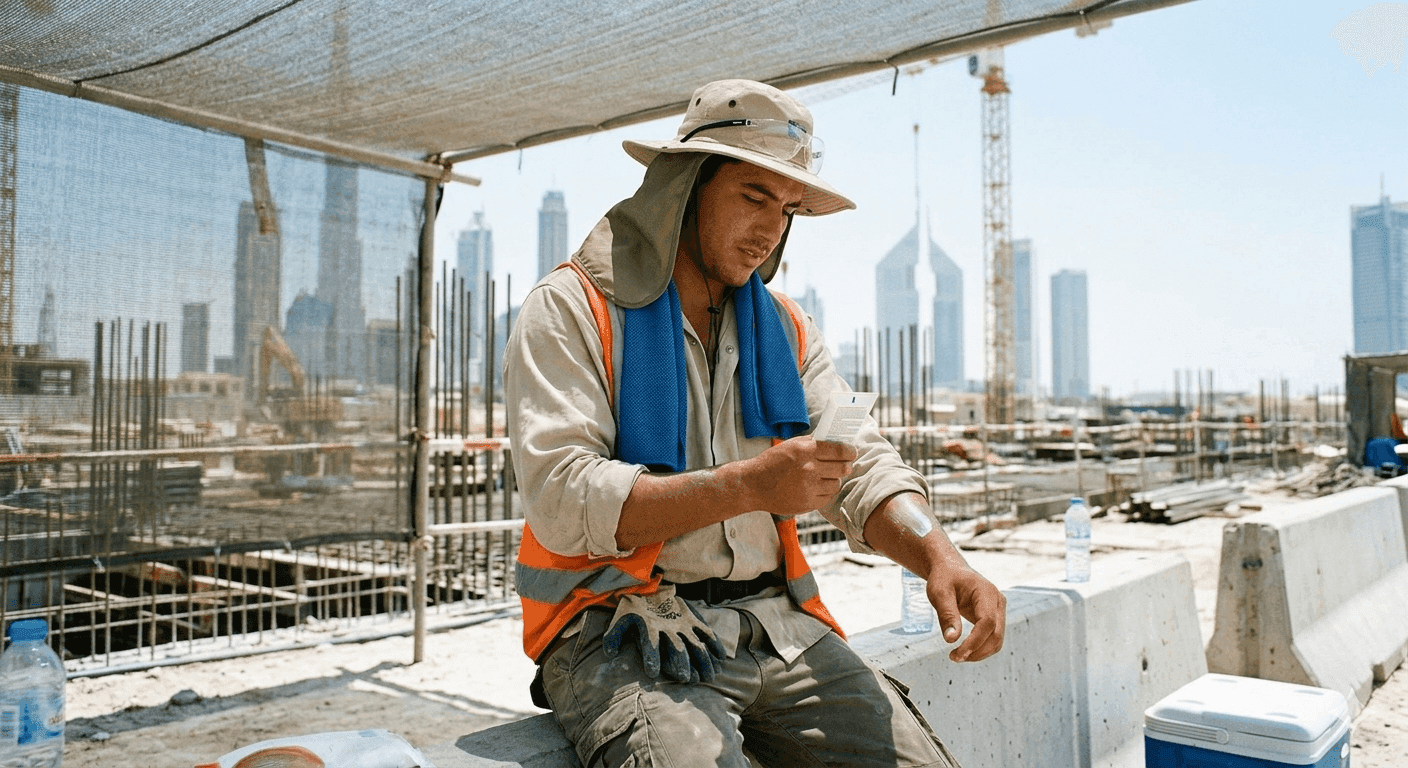
The neck is one area that gets hit hard by the sun, especially for workers wearing helmets. A cloth flap at the back of the helmet can help with that. In case of workers who don’t have helmets, a wide-brimmed hat also gives good shade.
Simple cooling aids can help too. A damp towel, wet scarf, or cooling bandana around the neck or forehead can bring some quick relief during a hot shift.
Sunscreen matters as well. Using SPF 30 or higher and reapplying it every couple of hours helps protect exposed skin.
Take Breaks and Follow Dubai’s Midday Work Rules
Working in extreme heat can wear anyone down, even people who are used to outdoor work. Hours in direct sun can take a toll before you fully realize it. Energy drops, the body heats up, and the risk of heat illness starts climbing.
That is why breaks matter. If you are working outside in direct sunlight, stepping away for 10 to 15 minutes every hour can help your body cool down. On tougher days or after heavy physical work, you may need shorter breaks more often.
While on break, rest in shaded, well-ventilated areas.
Dubai's Midday Work Rules
Dubai's Midday Work Rules, often referred to as the Midday Break Law, are strict legal regulations enforced by the UAE Ministry of Human Resources and Emiratisation (MoHRE) to protect outdoor labourers from life-threatening summer temperatures. Summer safety for outdoor workers is legally enforced during these months, and for good reason.
Between June 15 and September 15, outdoor work is not allowed from 12:30 PM to 3:00 PM. That part of the day can be brutally hot, and continuing heavy work in those hours can be dangerous.
Workers are also supposed to have basic support on site. That means access to shade, cooling arrangements, drinking water, electrolyte drinks, and emergency medical help if something goes wrong.
These are not just guidelines that companies can ignore. Businesses that break the rules can be fined anywhere from AED 5,000 to AED 50,000.
If workers are being asked to keep working during banned hours or basic protections are missing, they can report it anonymously through MoHRE by calling 600590000 or using the MoHRE app.
Employer Responsibilities for Heat Safety
Keeping workers safe in extreme heat takes more than reminders to drink water. Employers play a big role in preventing heat-related illness, and worker safety should be embedded into every part of site operations.
- Plan Work Around the Heat
Real heat safety starts before the shift even begins. If the job involves heavy lifting or physically demanding work, those tasks are better scheduled earlier in the morning or later in the evening, when conditions are less harsh.
- Make Cooling and Hydration Easy
Workers should not have to hunt for water in extreme heat. Clean, cool drinking water needs to be easy to access throughout the day. Electrolyte drinks or ORS can also help replace what the body loses through hours of sweating.
Break areas are important as well. Shaded rest spaces, cooling fans, misting stations, or air-conditioned vans and tents can make a real difference.
Breathable safety clothing, helmets with neck protection, and simple cooling aids like damp towels can help workers cope better.
- Teach People What to Watch For
Many heat-related emergencies start with warning signs that get ignored.
Workers should know what early heat stress looks like, how often to hydrate, and when to slow down or stop. Safety reminders posted in languages workers actually understand can help keep that awareness alive on site.
Supervisors should be actively watching for workers who look unwell and create a culture where people feel comfortable speaking up instead of pushing through symptoms.
- Be Ready If Something Goes Wrong
If someone develops severe heat illness, there should be no confusion about what happens next.
Every worksite should have a clear emergency response plan, stocked first aid supplies, and people who know basic emergency response. If heat stroke is suspected, medical help needs to be called immediately.
Beyond the basic legal requirements, employers can boost morale and safety by organizing cool-down activities (like handing out chilled water or doing hydration challenges) and building relaxation areas or "smash rooms" in worker accommodations to relieve stress.
Recognise Heat Emergencies and Act Fast
Heat-related illness can get worse fast, which is why early warning signs should never be ignored. Summer safety for outdoor workers depends on everyone on site knowing what to look for. Workers should keep an eye on themselves and each other for things like heavy sweating, dizziness, unusual tiredness, nausea, muscle cramps, a racing heartbeat, pale or clammy skin, or fainting. Sometimes the body gives warning signs before things become serious.
If someone starts showing these symptoms, work should stop right away. Move them somewhere cooler or into the shade, loosen tight clothing, and if they are fully awake and alert, let them take small sips of water. Some signs are much more serious. Confusion, collapsing, loss of consciousness, or skin that feels very hot and dry with little or no sweating can point to heat stroke. That is a medical emergency and needs immediate help.
Stay Safe with First Response Healthcare
For non-emergency medical concerns where the person is stable but still needs medical advice, a Doctor at home service in Dubai can be a practical option. It can help with early assessment, hydration guidance, and treatment at home without making someone travel in extreme heat. But if heat stroke is suspected, call emergency services immediately.