The good news is that most cases of heat illness during Hajj are preventable. Pilgrims who stay hydrated, time their movements wisely, and listen to their bodies tend to get through the season without serious trouble. The heatstroke prevention tips below are practical and straightforward. None of them require special equipment or medical training. They just need to become a habit before the heat gets a chance to catch up with you.
Drink Water Before You Feel Thirsty
Thirst is a late signal. By the time you feel it, your body is already running low on fluids. Carry a water bottle and fill it whenever you can. Sip throughout the day rather than drinking large amounts at once. Avoid caffeinated, sugary, and fizzy drinks as they worsen dehydration. Oral rehydration salts are worth packing as they replace minerals lost through sweat. Zamzam water with a small pinch of salt works as a basic rehydration option while in Makkah. Set a reminder on your phone if you need to. In the middle of worship and movement, it is easy to forget. Consistent fluid intake across the whole day is far more effective than drinking a large amount all at once.
Time Your Rituals Around the Heat
The sun is strongest between 11 AM and 4 PM. Plan Tawaf, Sa'i, and other outdoor activities for early morning or after Isha, where possible. Use the midday hours to rest in your hotel or pray in air-conditioned mosques. This is not cutting corners on your pilgrimage. It is how you stay well enough to complete every ritual across the full five days. A pilgrim who paces themselves through the heat is in a much better position than one who pushes hard early and spends the next day recovering. Good timing is one of the most underrated Hajj heat safety tips there is.
Wear the Right Clothing
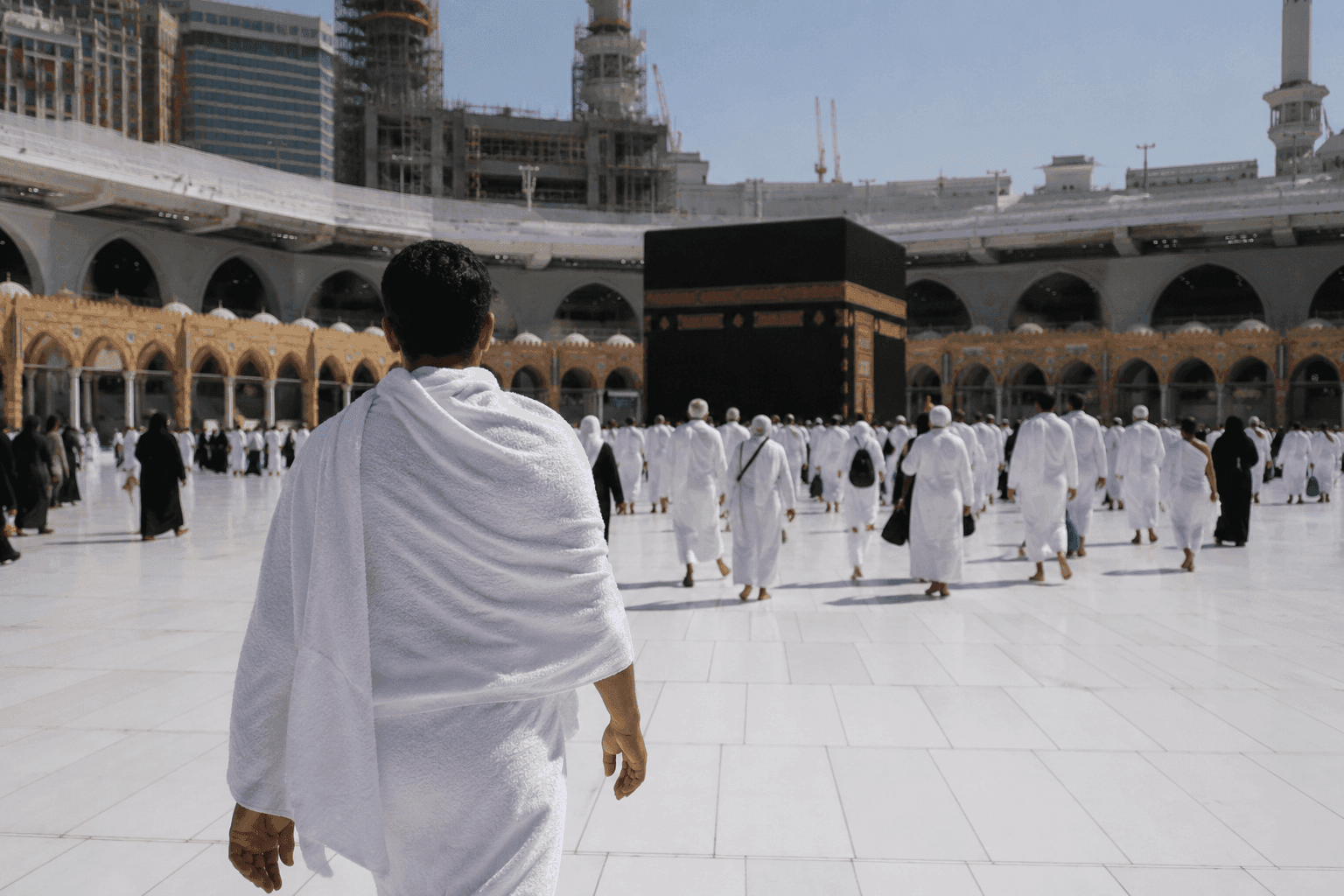
Light-coloured, loose cotton clothing helps your body release heat. A wide hat or umbrella provides real shade and reduces the burden on your body during long walks. Dark colours absorb heat. Tight fabrics trap it. What you wear matters more than most pilgrims expect, especially during the long walks between sacred sites. If you are performing in Ihram, which offers very little sun protection on its own, a hat or umbrella becomes even more important. Pack one that is easy to carry and will not slow you down. It is a small addition that pays off across every outdoor hour of the pilgrimage, and it's one of the most repeated Hajj heat safety tips issued by health authorities every season.
Use Simple Cooling Tools
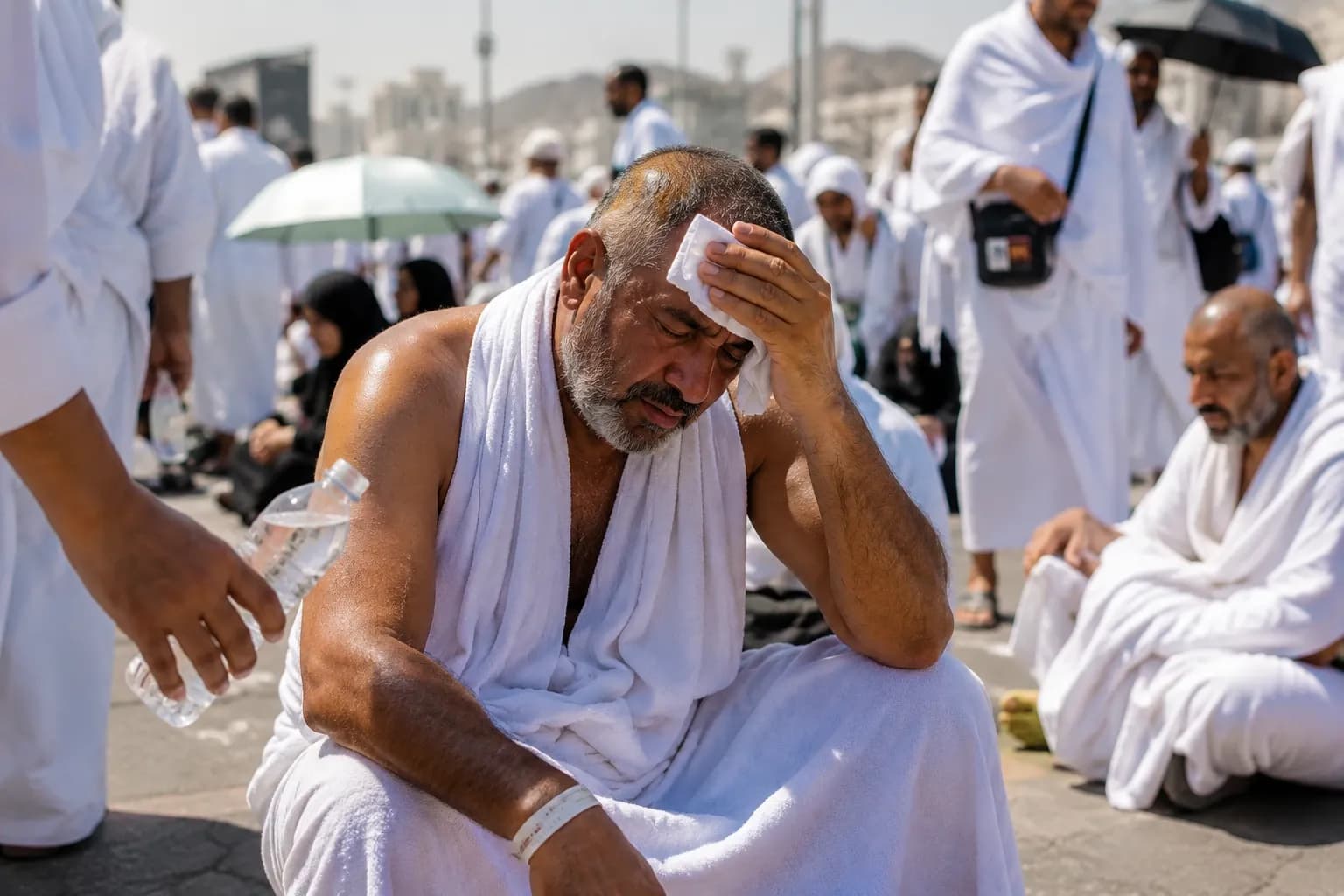
A damp cloth on your neck or shoulders works. So does a small spray bottle with water. Cooling towels, portable neck fans, and fragrance-free misting sprays are all permitted in the Haram. These are not luxuries but necessities. On a day when temperatures are above 40°C and you have been walking for hours, a cooling towel on the back of your neck can bring your body temperature down fast. Pack these in your day bag before you leave the hotel. They take up almost no space and are genuinely one of the best heatstroke prevention tips you can follow.
Rest When Your Body Tells You To
There is no shame in slowing down. If your legs feel weak or your head starts spinning, sit in a shaded spot, drink water, and rest. Many pilgrims feel pressure to keep moving, worried they will miss something or fall behind their group. That pressure is worth resisting. Hajj is a multi-day journey. Your body needs recovery time between the long walks and rituals. Pushing through early warning signs is how heat exhaustion becomes heatstroke. Ten minutes of rest in the shade now can prevent hours in a medical tent later. Slowing down is not failure. It is better than exhausting your body and ending up with serious health consequences.
Know the Signs and Act Quickly
Heat illness moves in stages. Fatigue and heavy sweating come first. Then headache and dizziness. Confusion and dry skin are more serious signs that the body's temperature has gone beyond what it can manage on its own. At that point, it is a medical emergency. Get to a cool place and seek help immediately. First aid stations are available throughout the Haram. Any staff member can direct you. Do not wait to see if symptoms pass on their own. With heatstroke in Hajj, acting fast is the difference between a quick recovery and a serious one. Tell someone near you what you are feeling rather than trying to manage it alone.
Special Considerations for Elderly Pilgrims and Families
Elderly pilgrims and those with chronic conditions face the highest risk of serious heat illness during Hajj, according to guidelines published by the Saudi Ministry of Health. If you are travelling with elderly family members or children, book accommodation with direct air-conditioned access to the Grand Mosque where possible. If wheelchair access is needed, inform your travel agency before arrival so there is no delay once you are on the ground. Foods with high water content, such as fresh fruit and yogurt, help with hydration alongside regular fluid intake. Plan more rest stops, shorter walking distances, and build extra time into every part of the day.
See a Doctor Before You Travel
A pre-travel health check is worth doing before Hajj, especially if you have an existing condition. It gives you a chance to review your medications, understand your personal risk, and put together a basic travel health kit with hydration salts, sunscreen, and anything else you may need. If you have a heart condition, diabetes, or kidney disease, heat illness will affect you faster than a healthy adult. Your doctor needs to know you are going, and you need to know what to watch for once you arrive. A short appointment before you travel is a small investment against a serious risk.